



My 4 best spots for wildlife photography in Costa Rica
Costa Rica is a wonderful country for wildlife photography. Despite its small size, it is home to over 6% of the world’s biodiversity. Its varied and accessible ecosystems make it a dream destination for photographers, from beginners to professionals.
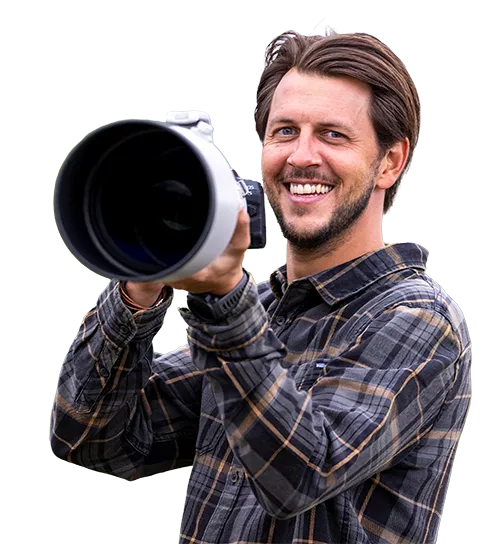
For over 15 years, I’ve been a regular visitor to the country, fascinated by its lush natural environment. I started out studying birds on scientific expeditions. Today, I regularly guide nature photography trips with the Objectif-Nature agency.
Here are my 4 favorite spots for photographing Costa Rican wildlife.
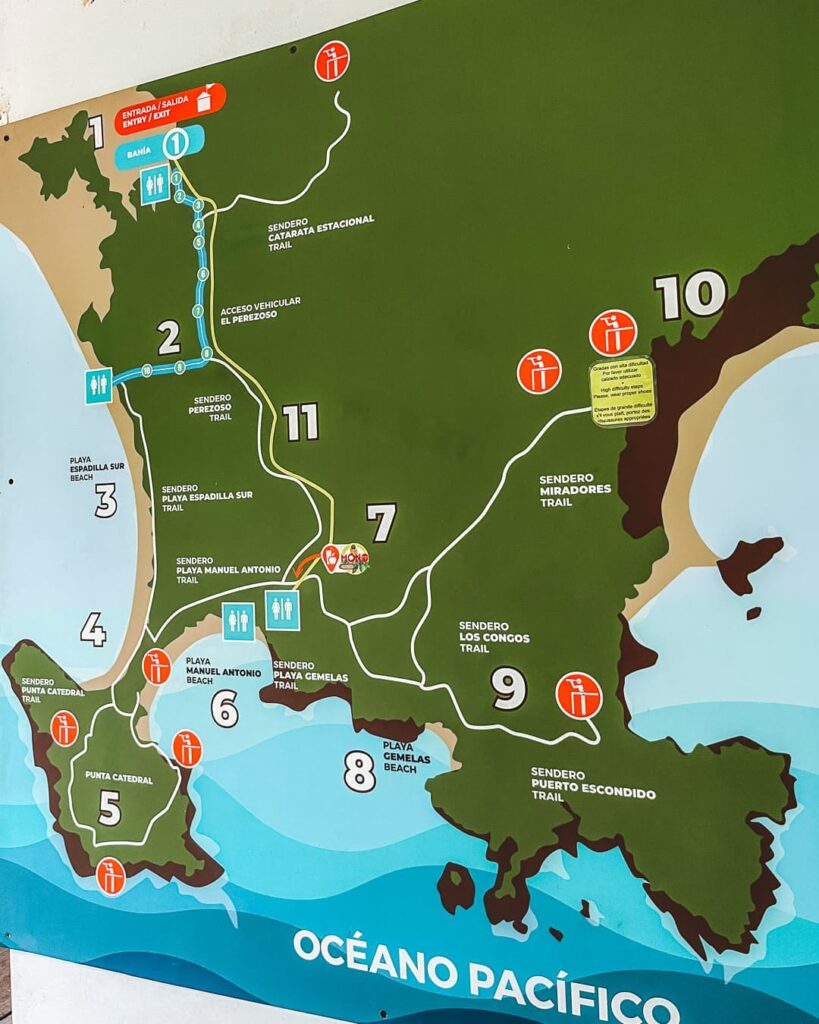
1.Manuel Antonio National Park
Why photograph here? This park on the Pacific coast is one of the most photogenic in the country. Between white sand beaches, steep cliffs and dense tropical forest, the scenery is incredible. It’s like being in the film “Pirates of the Caribbean”.
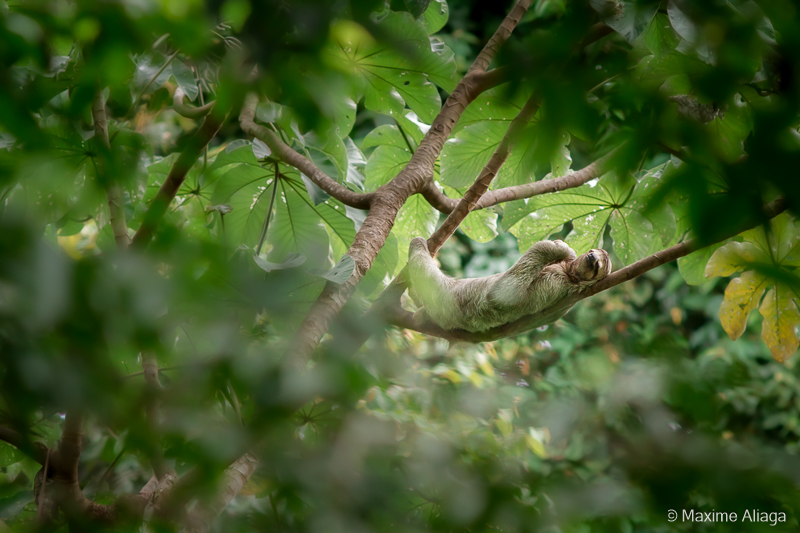
Wildlife:capuchin monkeys, squirrel monkeys, sloths, iguanas, tropical birds.
My feedback:It’s a very busy tourist spot, but if you arrive early, you can enjoy the forest in complete tranquillity. The trails are well laid out and make for great encounters.
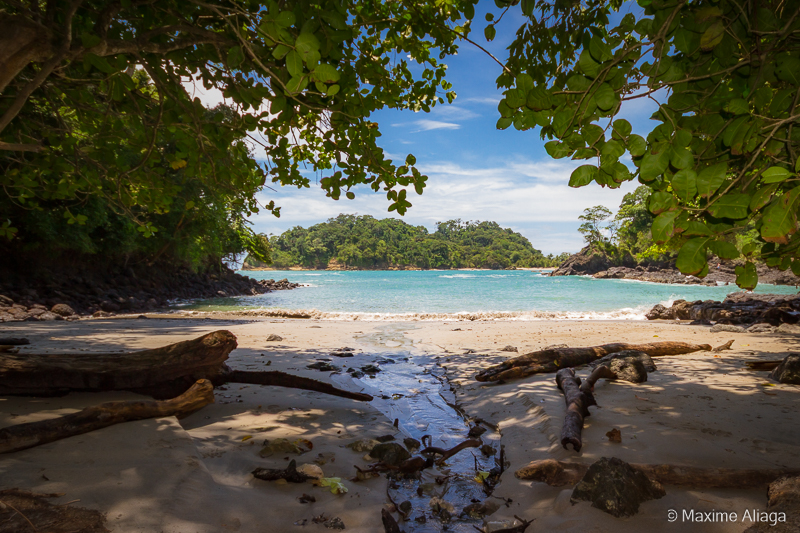
The scenery here is breathtaking. Lush forests spill out onto heavenly beaches.
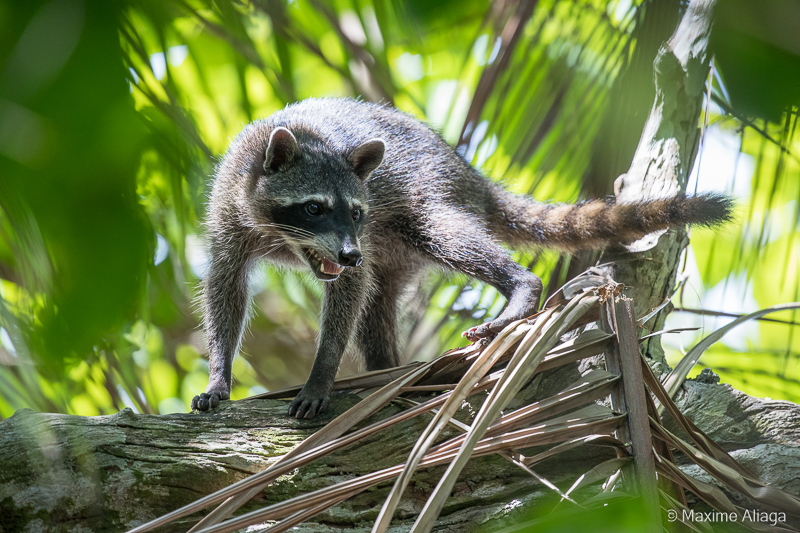
The kingdom of the mapacheHere, there’s a high density of raccoons and capuchin monkeys. Accustomed to human presence, they won’t hesitate to rob you if you’re careless.
It’s true that Manuel Antonio Park is very crowded, but I think it’s still a must-see in terms of tropical scenery on the Pacific side, with a high density of wildlife. To avoid the crowds, make sure you leave early in the morning.
Practical tips
- Arrive as soon as it opens (Manuel Antonio National Park is open every day except Tuesday, from 7:00 a.m. to 4:00 p.m.).
- Choose undergrowth paths for the soft light
- Watch out for raccoons, confirmed bag snatchers!
Finally, don’t forget that animals are wild creatures and that respect for their space and well-being is crucial. Ethics in wildlife photography are paramount: don’t disturb animals just for the sake of a picture! Avoid approaching them too closely or disturbing their natural behavior, and always be aware of how you interact with them when photographing them. By knowing your subjects and respecting their space, you can create authentic and powerful images that show the life and beauty of the animals you photograph.
2.2Tenorio Volcano National Park
Why photograph here? Volcan Tenorio National Park is renowned for its famous Rio Celeste, an almost unreal turquoise-blue river. With its dense rainforest, spectacular waterfalls and natural hot springs, it’s a fairytale setting that will delight wildlife and landscape photographers alike. The atmosphere on the banks of the rio celeste is magical.
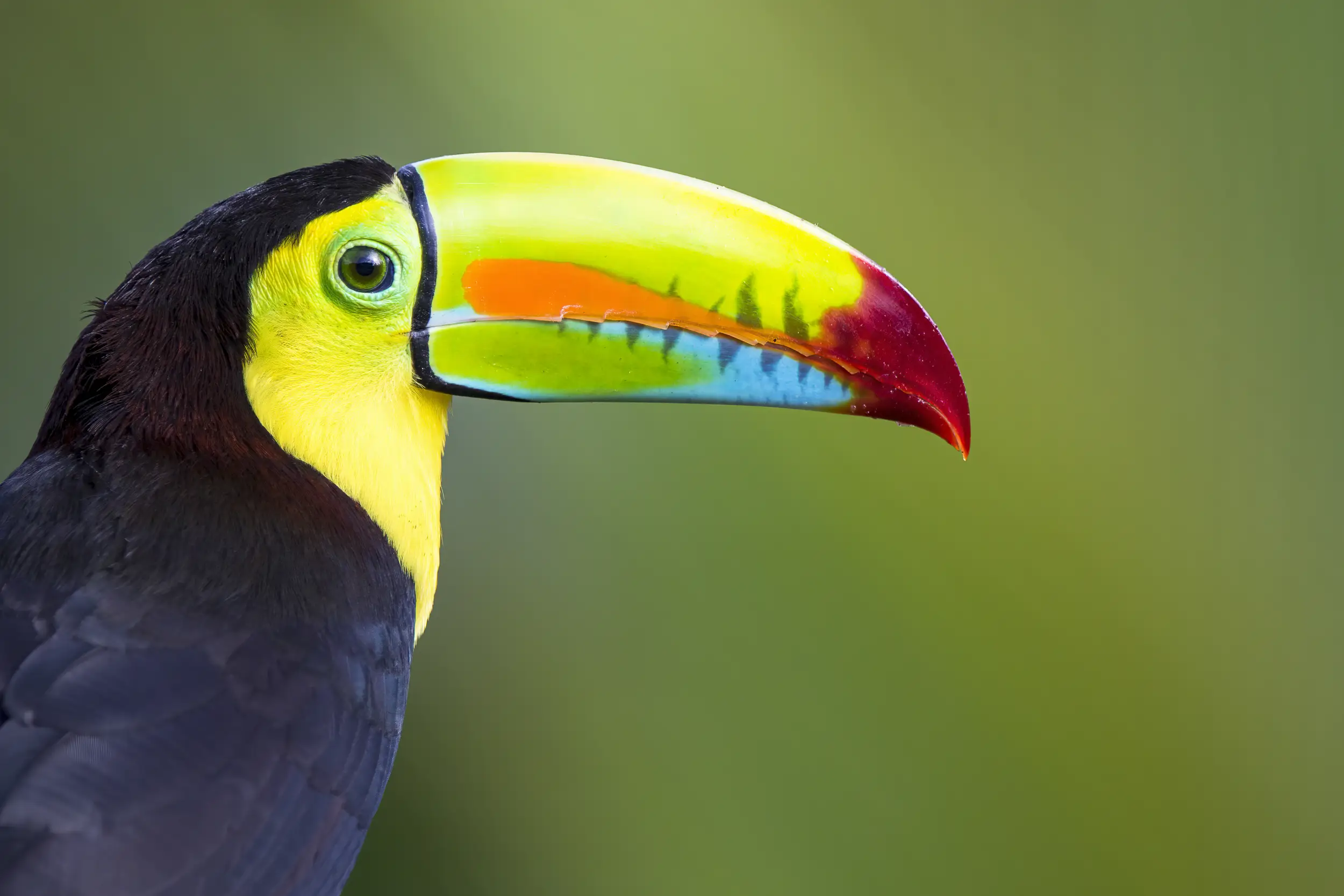
Wildlife: howler monkeys, toucans, blue-browed motmots, coatis, dendrobates and the occasional tapir, which can be seen on the river banks.
My feedback: It’s a truly magical and unique place, with paths that are easy to access. The rio celeste is obviously the main attraction, but the park is also renowned for its wealth of birdlife.
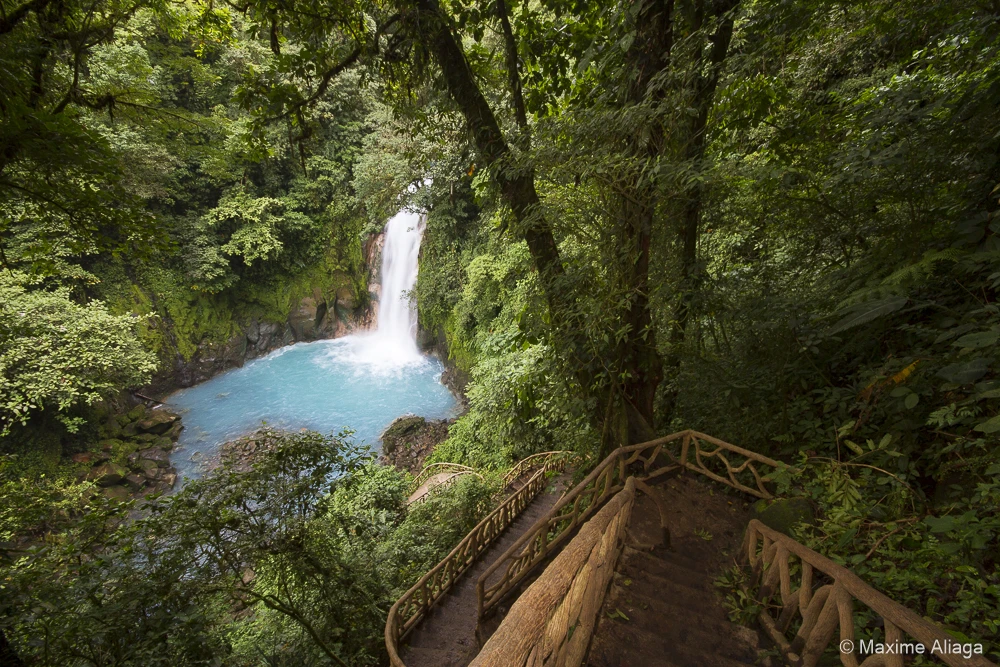
The Rio Celeste is one of the few places where the color of the water is naturally turquoise. To capture its full intensity, it’s best to shoot at the beginning or end of the day, when the light is softer and the contrasts sharper.
It’s the perfect place to try out a long exposure on a tripod to highlight the waterfall and the silky effect of the turquoise water.
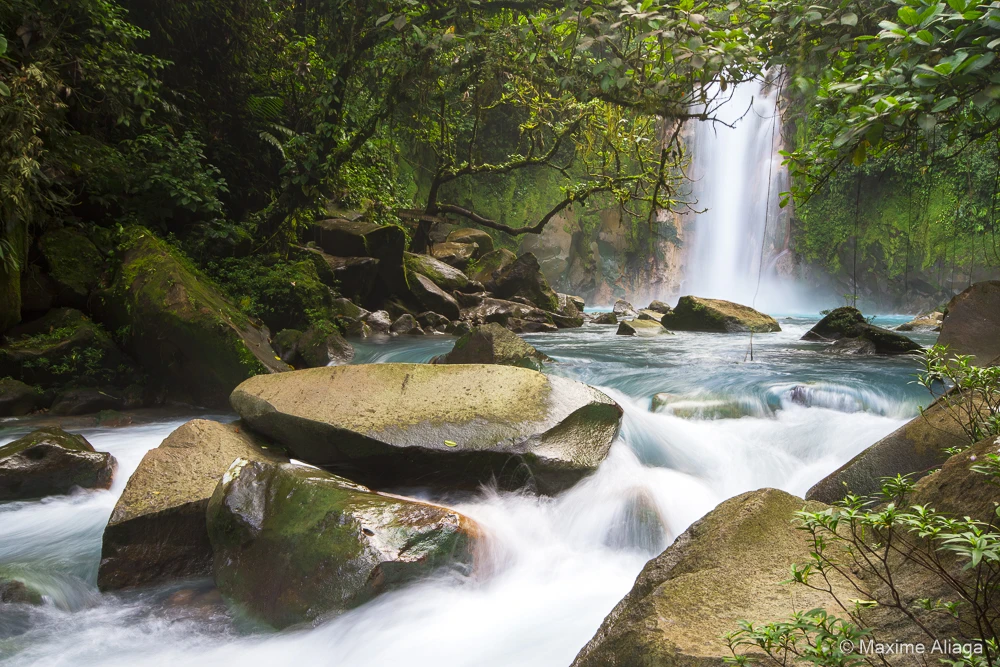
The Tenorio Volcano Park requires a little more effort than other sites, but it offers a unique experience: photographing a supernaturally blue river in the heart of dense jungle. Get ready for an experience that’s both sporty and enchanting.
Practical tips
- Bring good hiking boots, as the trails can be slippery.
- Take along a lightweight tripod to capture stunts in long exposure.
- Avoid busy times (10am-2pm), and start early in the morning to enjoy the soft light and tranquility.

To get the most out of your Tenorio Volcano Park experience, I recommend staying at the Tenorio Lodgelocated near the Rio Celeste. This eco-responsible lodge was built with respect for the environment, with a sustainable approach (water and energy management, recycling).
The bungalows are spacious and open onto nature, perfect for early morning birdwatching from your terrace. And best of all, the lodge is run by French wildlife photographers who know the area well and can advise you on how to optimize your photo outings.
As well as being comfortable, it’s an ideal place to stay connected to nature while preparing your most beautiful images of the Rio Celeste and its wildlife.
3.Sarapiqui and Virgen region
Why photograph here? The Sarapiquí region, and in particular the La Virgen area, is a true paradise for nature photographers. Situated in the Caribbean foothills, this area is covered by lush tropical rainforest, criss-crossed by rivers. Lodges here specialize in welcoming photographers and naturalists, with equipped observatories and feeding stations that enable you to get up close and personal with incredible wildlife.
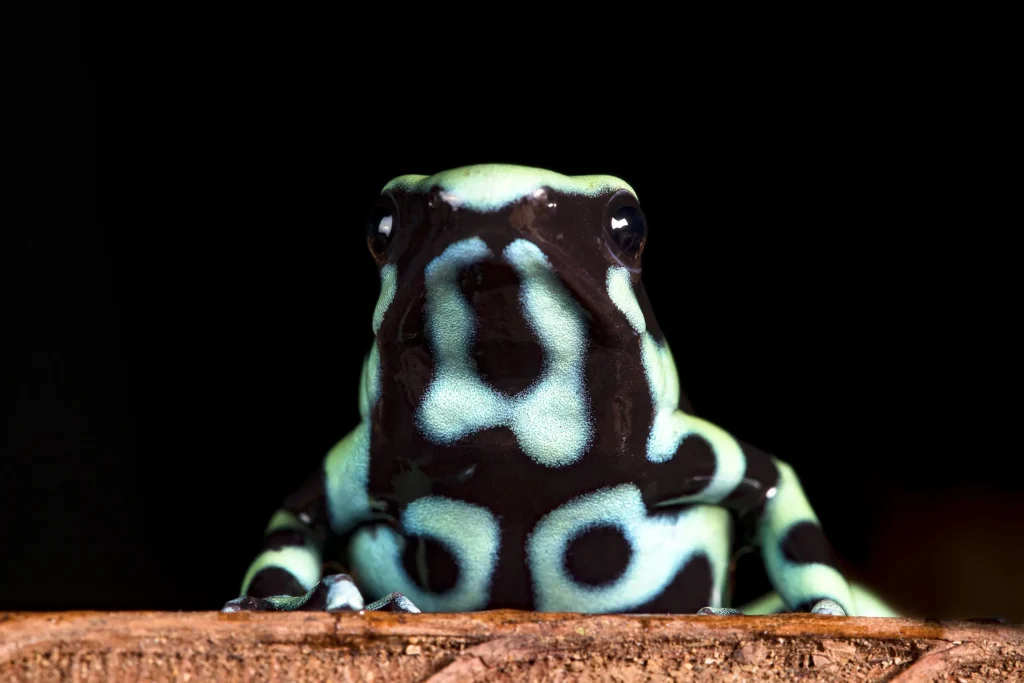
Wildlife includes hummingbirds, multicolored tanagers, toucans, macaws, dendrobate frogs, sloths, howler monkeys and a multitude of butterflies, including the famous blue morpho.
My feedback:This is a region where you never get bored. Bird watching is easy from the feeders and platforms set up by the lodges, perfect for testing out hummingbird action photography. And in the evening, when the forest comes alive, it’s a real immersion in the world of herpetology: tree frogs, dendrobates and insects offer a fascinating spectacle.
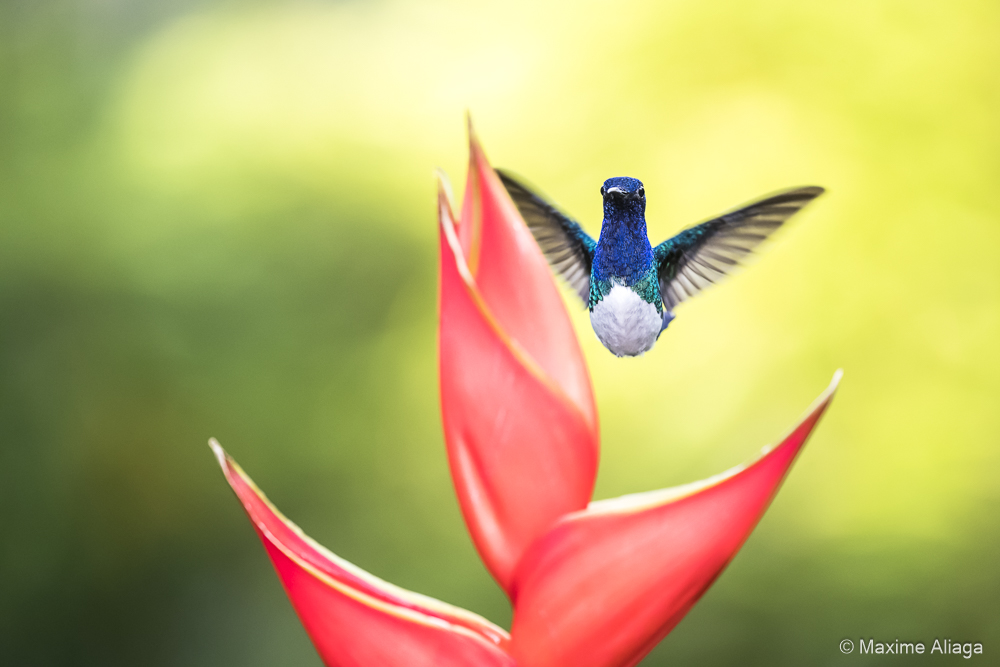
Many lodges offer the opportunity toobserve hummingbirds feeding on the nectar of the surrounding flowers (here a male Jacobin hummingbird).
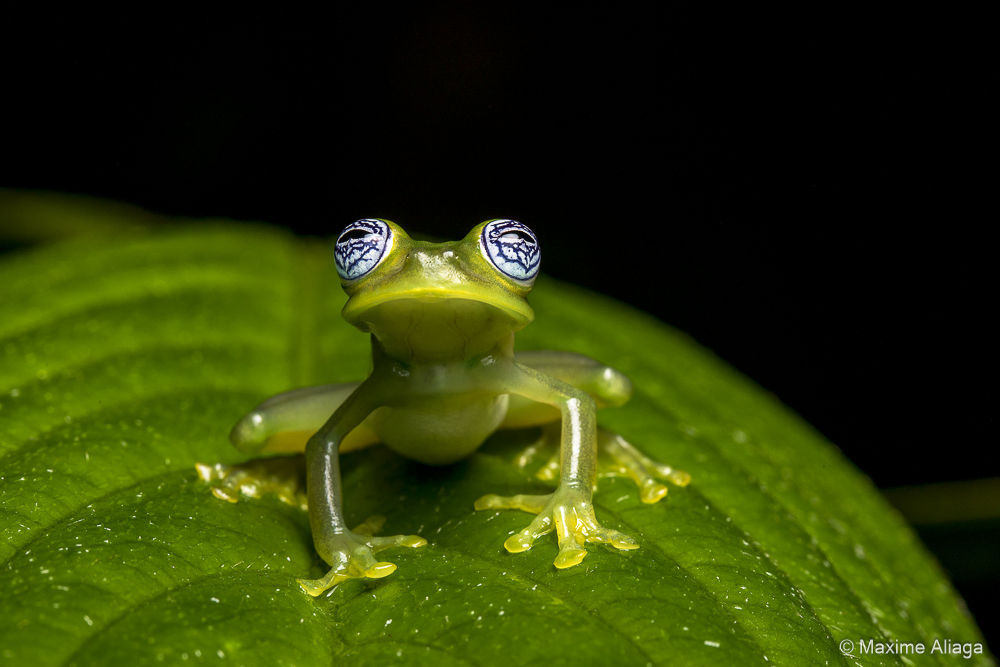
Lhe region is a hot spot for reptiles and amphibians. Don’t hesitate to take a nocturnal walk with a specialist guide (here the glass frog, sachatamia ilex).
Sarapiquí and La Virgen remain for me one of the best spots in Costa Rica to combine ornithological and herpetological photography. The proximity of the wildlife, the richness of the private forests and the variety of species make this region a must-see.
Practical tips
- Stay several days to explore the region.
- Choose undergrowth paths for the soft light
- Lodges often organize "night tours" with guides specialized in herpetology: not to be missed for discovering tree frogs, frogs and reptiles.
In this region, each lodge has its own “private reserve”, often set aside for wildlife observation. It’s a real luxury for the photographer: you can get up at dawn, step out of your room and already find yourself face to face with hummingbirds or toucans. And in the evening, you can set off with a guide to explore the wetlands in search of the famous red-eyed tree frogs. For a few days’ stay, this is the ideal place to multiply the variety of images without having to travel long distances.
4.corcovado national park
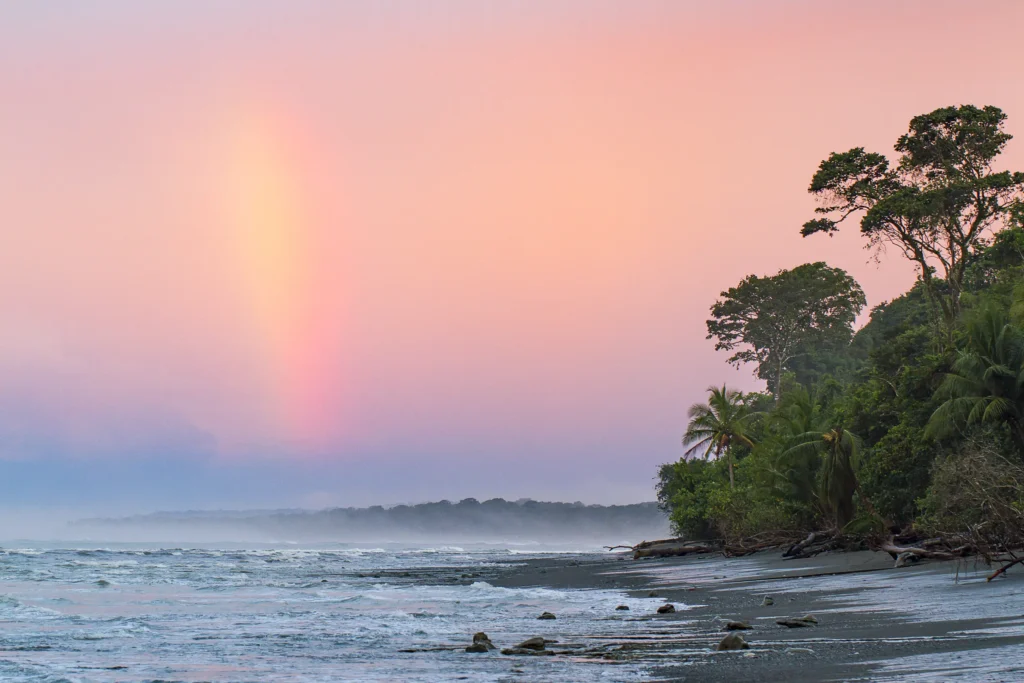
Why photograph here?Located on the Osa Peninsula, Corcovado National Park is often described as the jewel of Costa Rica. It’s one of the country’s wildest and most unspoilt areas, with an exceptional density of biodiversity. Here, we plunge into the heart of a primary jungle surrounded by deserted beaches and crystal-clear rivers. To photograph in Corcovado is to feel like an explorer, far from the crowds, in the face of raw, unspoilt nature.
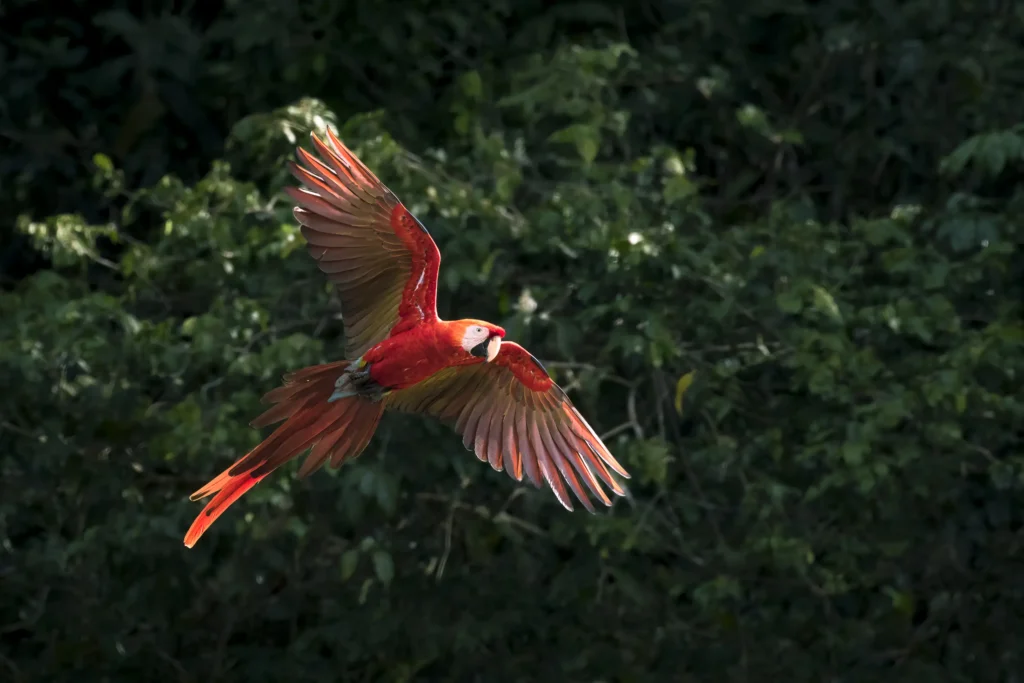
Wildlife: Jaguar and puma (rare but possible), Baird’s tapir, peccaries, spider monkeys, scarlet macaws, crocodiles, anteaters, coatis, and an impressive variety of tropical birds. There are also many reptiles, notably the spearhead, and amphibians.
My feedback: This is quite simply my favorite park in Costa Rica. It’s raw adventure in a lush jungle full of animals. You never know what you’ll run into, but the frequent sightings of tapirs are a real treat.
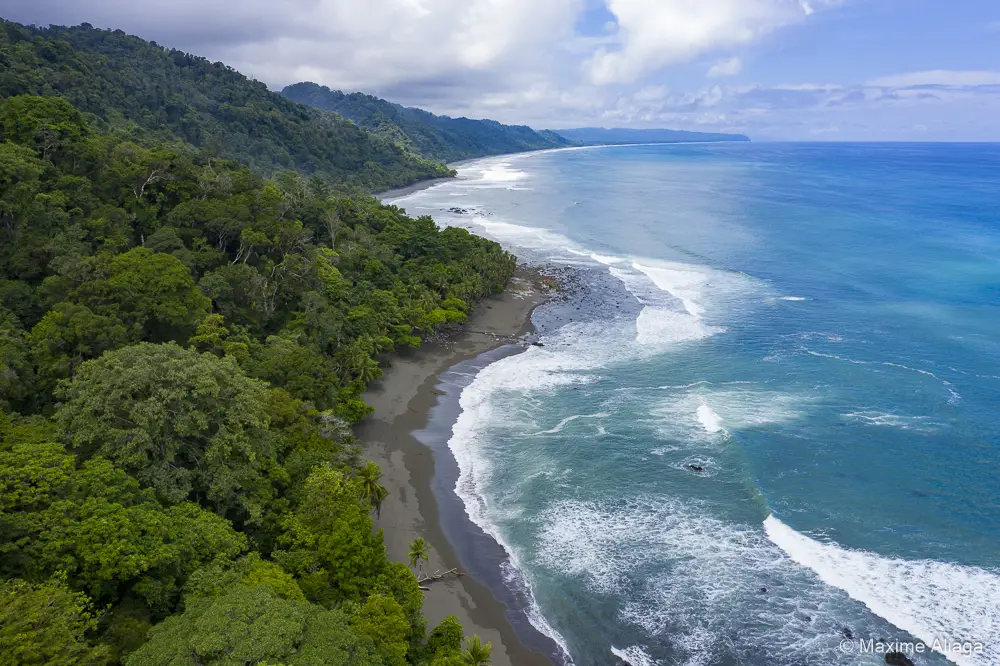
Here, the untamed Pacific meets lush forests. A truly wild landscape where every expedition becomes a true adventure.
The Baird’s tapir is one of the park’s undisputed stars, and here they are easy to observe. Some lucky visitors see the occasional puma, which is not shy at all.
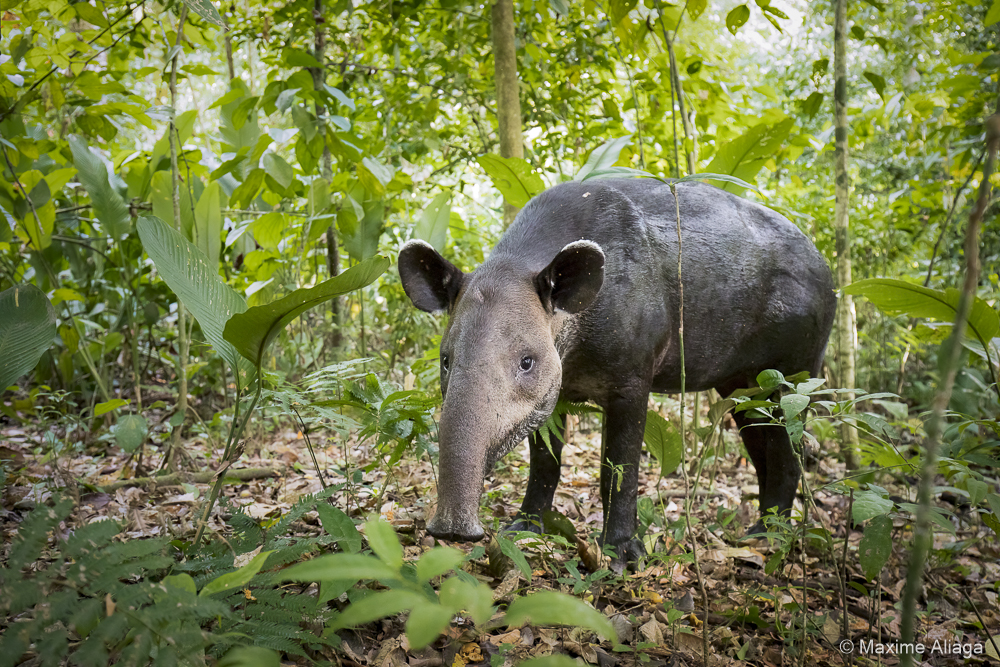
Corcovado is probably the wildest park in Costa Rica, and a must-see for any naturalist photographer. It offers that rare feeling of being alone in the world, surrounded by nature both beautiful and powerful.
Practical tips
- Access is only possible with a certified naturalist guide.
- Be prepared to walk for several hours, sometimes in the heat and humidity: carry water and protect your camera equipment.
- Sleep at LA SIRENA au mions resort for a night or two
To explore Corcovado, there are two main access points: Drake Bay (arrival by boat, often from Sierpe) and Puerto Jiménez (with a long approach walk from La Leona). The park’s focal point is the La Sirena guard station, located right in the heart of the jungle. This is where groups of tourists and their guides converge for their expeditions into the forest.
I advise you to stay for several days: basic but comfortable accommodation is available on site, allowing you to experience total immersion in the jungle. This is the best option for increasing your chances of spotting large mammals such as tapir, or even jaguar. Sunrises and sunsets at La Sirena are magical moments when the forest awakens or falls asleep before your very eyes.

To book the best guides, I highly recommend using Surcos Tours. This is the agency of my friend Nito, a passionate and experienced guide who knows Corcovado like the back of his hand. With him, you don’t just visit the park, you really experience it: animal observation, naturalist explanations, well-honed logistics… everything is thought out to make your adventure unforgettable and respectful of nature.
FAQ
Frequently asked questions about Costa Rica
The dry season (December to April) is the most popular: clear skies, passable roads and ideal travel conditions. But it’s also the most touristy and the most expensive.
👉 Yes, Air France offers a direct flight Paris (CDG) → San José (SJO). The duration is around 10h40, making it the fastest and most comfortable option.
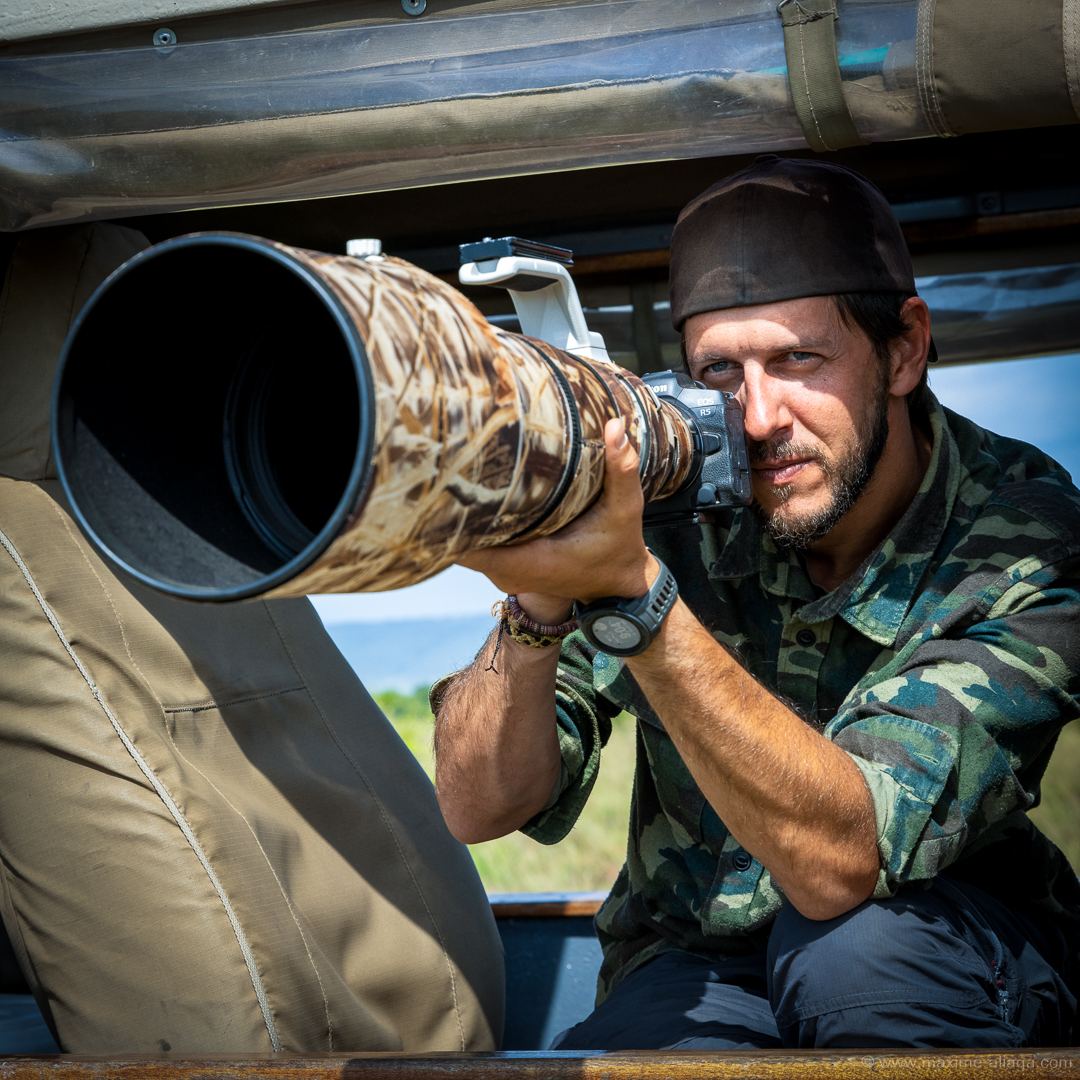
A telephoto lens between 300 and 600 mm is essential for birds and mammals. For amphibians, reptiles and macro, a 100 mm or 150 mm macro is recommended.
👉 Yes, I do it all the time; but you have to get organized. Most big whites fit in the cabin if you have a suitable camera bag.
On a car safari, no problem, but on a trek or low-cost plane, it becomes a real constraint.
In these cases, a 100-500mm or 200-800mm is much more practical.
Take along a rain cover, silica sachets against humidity and a waterproof bag. The climate is hot and humid, especially in the Caribbean.
No, Costa Rica is safe for photographers. The only real risk is natural: humidity, rain and sometimes theft by… curious, thieving capuchin monkeys! That said, never leave your camera equipment alone in your vehicle.
To find out more...
Here is my Costa Rica image gallery
Travel with my newsletter!
Enjoy the stories behind my travels, my secrets and the behind-the-scenes stories behind my images. You'll also receive tips on how to progress in photography and master your cameras, as well as free content, exclusive images and many other surprises!
CONTACT ME
Would you like to work with me, talk about my projects or take a training course? Let's talk

